The creator economy in 2026 isn’t just about who can work the hardest; it’s about who can orchestrate the best “AI symphony.” With the global AI content generation market hitting $7.09 billion this year, the gap between those using basic automation and those using advanced creative agents is widening.
If you’re still copy-pasting from a chatbot into a doc, you’re living in 2024. Today, we are in the era of Multimodal Flow. Here are the ten tools defining the vanguard of content creation.
1. ChatGPT (OpenAI): The Strategic Brain
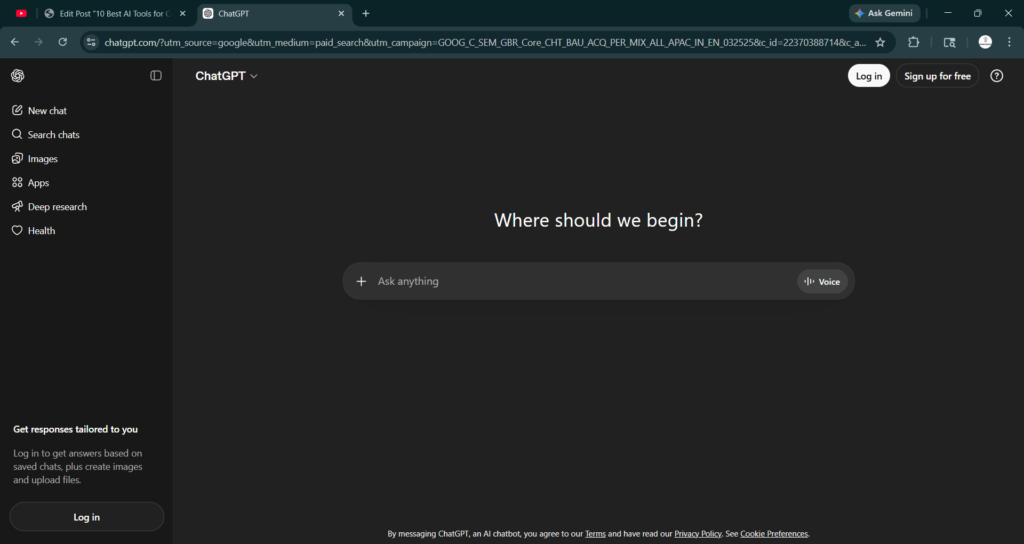
Despite the influx of niche competitors, ChatGPT remains the “operating system” for most creators. In 2026, the GPT-5 series has moved toward “Deep Thinking” modes that significantly reduce hallucinations.
- Best For: Holistic strategy, long-form drafting, and custom GPT agents.
- The 2026 Edge: It now features built-in “Research Mode,” which autonomously browses and synthesizes real-time data into cited reports before you even start writing.
2. Jasper AI: The Brand Guardian
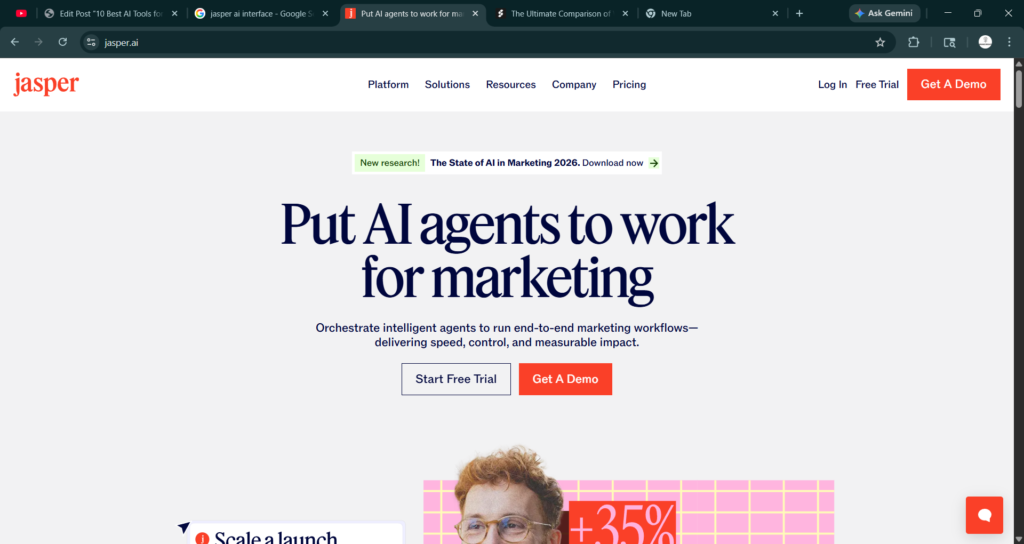
For marketing teams and professional bloggers, Jasper is no longer just a writer; it’s a Brand Voice Engine. It solves the biggest problem with AI: the “sameness” of the output.
- Best For: Maintaining a consistent tone across 50+ channels.
- The 2026 Edge: Its “Brand Voice 2.0” scans your entire past catalog (videos, blogs, emails) to ensure every AI-generated word sounds exactly like you.
3. Gemini (Google): The Ecosystem King
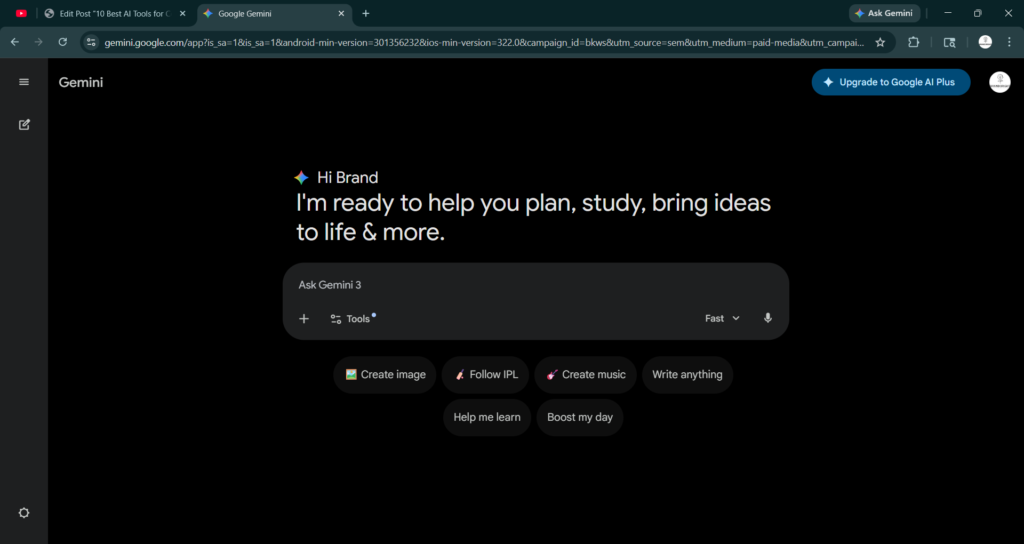
With the integration of Nano Banana 2 for imagery and Veo for video, Gemini is the most powerful multimodal tool for those living in the Google Workspace.
- Best For: High-fidelity image generation and Google-integrated workflows.
- The 2026 Edge: The ability to share your mobile camera via Gemini Live allows creators to get real-time AI scripting and visual ideas while on-set or on-location.
4. Midjourney v7: The Digital Artist
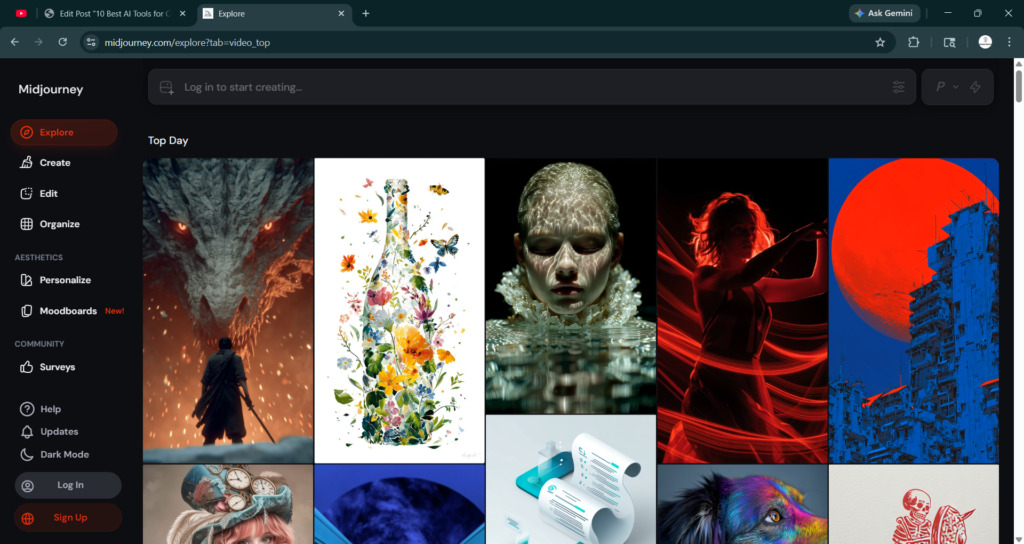
Midjourney remains the gold standard for aesthetic superiority. While other tools focus on “accuracy,” Midjourney focuses on Art.
- Best For: YouTube thumbnails, editorial illustrations, and high-fashion concept art.
- The 2026 Edge: The move away from Discord into a dedicated web-based “Pro Studio” has made professional-grade character consistency (keeping the same person in different scenes) a one-click reality.
5. Google Veo 3.1: Cinematic Video Power
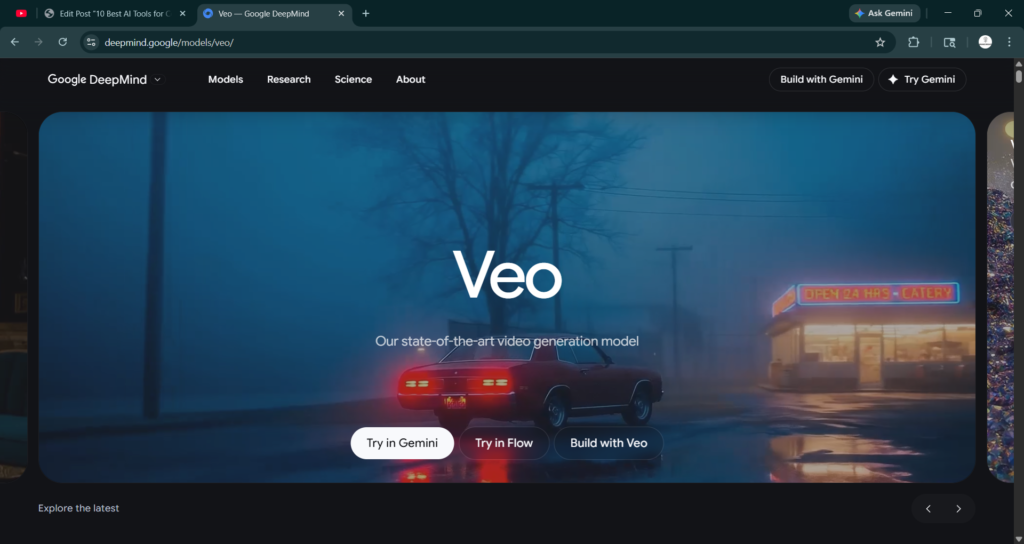
Video generation has hit its “iPhone 4 moment”—it’s finally ready for prime time. Veo 3.1 produces high-fidelity, 4K video clips with natively generated audio.
- Best For: B-roll, social media ads, and cinematic storytelling.
- The 2026 Edge: It now supports “Long-form Cohesion,” allowing you to generate clips up to 60 seconds that maintain physical consistency across the entire duration.
6. Descript: The “Edit-by-Text” Revolutionary
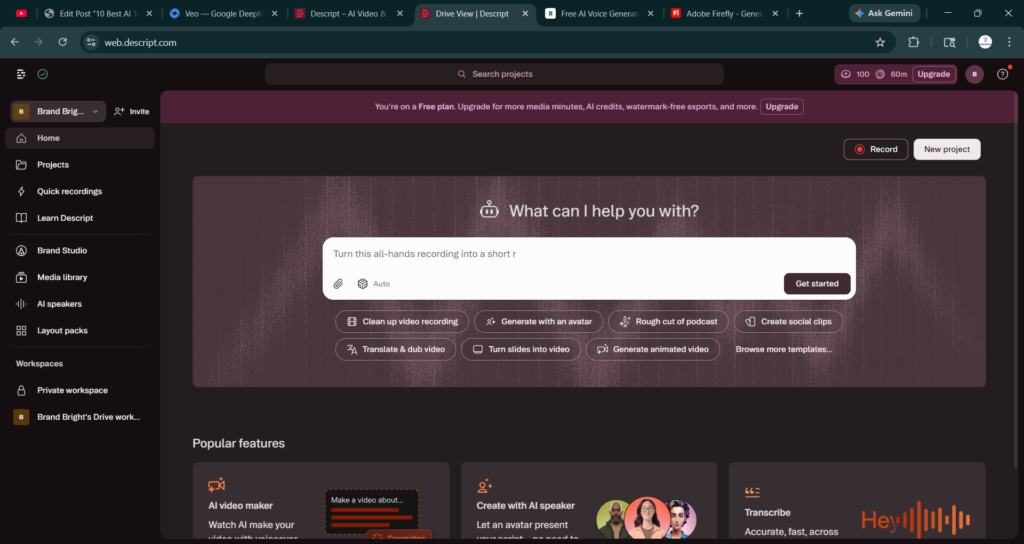
Editing video used to be a chore. In 2026, Descript treats video like a Word document. If you delete a word in the transcript, it’s deleted in the video.
- Best For: Podcasters and “Talking Head” creators.
- The 2026 Edge: The “Underdub” feature can now perfectly sync new audio to your lip movements, allowing you to fix a script mistake without re-recording the video.
7. Surfer SEO: The Visibility Navigator
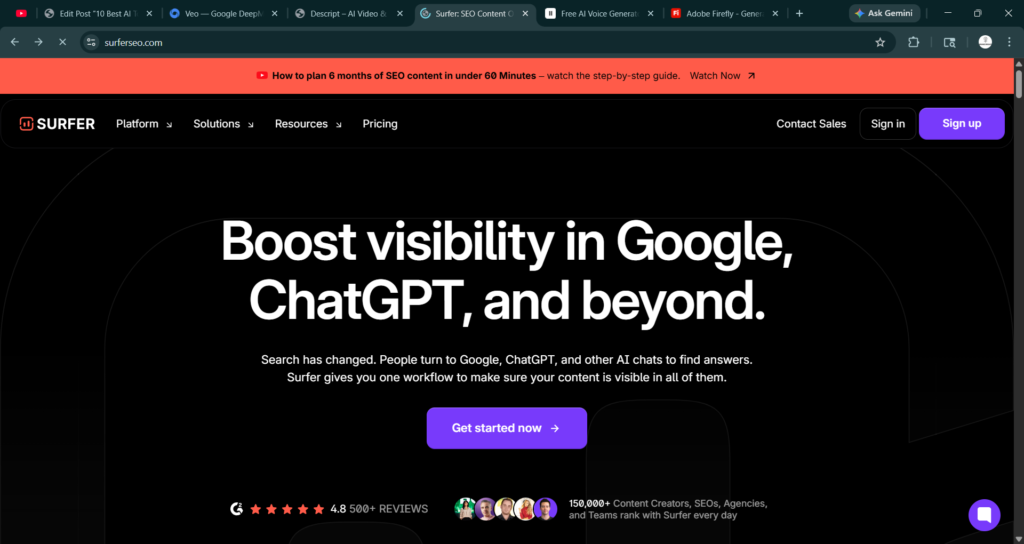
In 2026, SEO has evolved into AEO (Answer Engine Optimization). Surfer doesn’t just help you rank on Google; it helps you become the “cited source” for AI overviews.
- Best For: Organic growth and data-backed content structures.
- The 2026 Edge: Its “AI Visibility Toolkit” tracks how often your brand is mentioned in LLM responses (like ChatGPT or Perplexity) and suggests edits to increase your “AI share of voice.”
8. ElevenLabs: The Voice of the Future
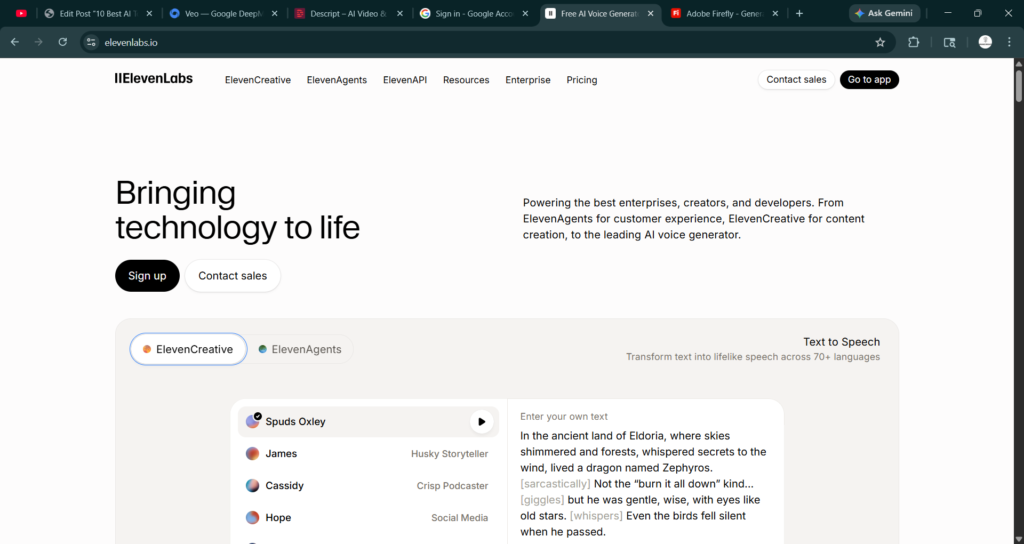
The era of robotic text-to-speech is dead. ElevenLabs provides voices that carry emotional weight, breath, and nuance.
- Best For: Narrating video essays, audiobooks, and localized content.
- The 2026 Edge: “Speech-to-Speech” allows you to record a rough take in your voice and transform it into a professional voiceover while keeping your original pacing and emotion.
9. Adobe Firefly 5: Commercially Safe Creativity
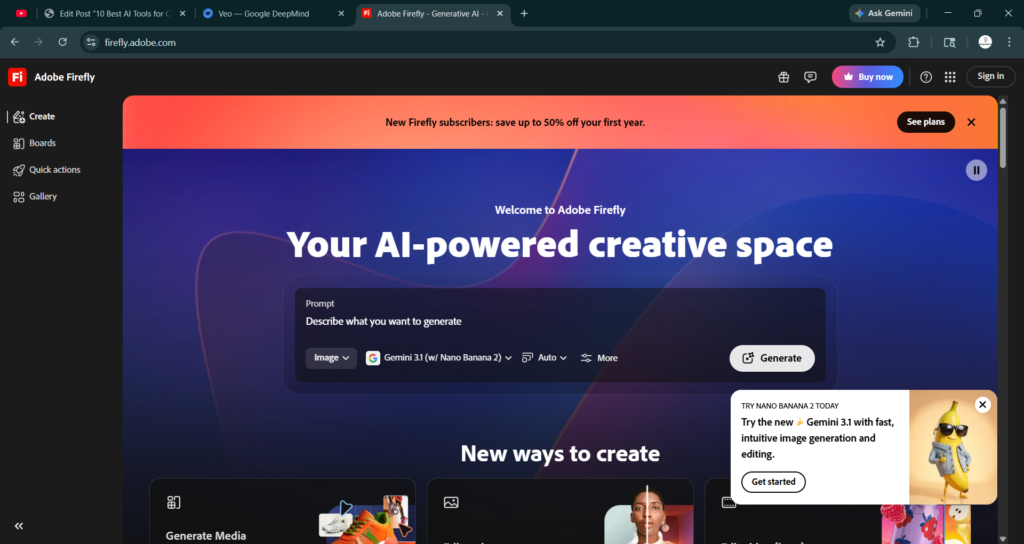
For creators working with major brands, “Legal AI” is a must. Firefly is trained only on licensed content, making it the only choice for corporate-safe assets.
- Best For: Graphic designers and corporate marketing teams.
- The 2026 Edge: Deep integration with Photoshop’s “Generative Expand” means you can turn a vertical phone photo into a horizontal 16:9 cinematic shot in seconds.
10. CapCut (By ByteDance): The Social Speed King
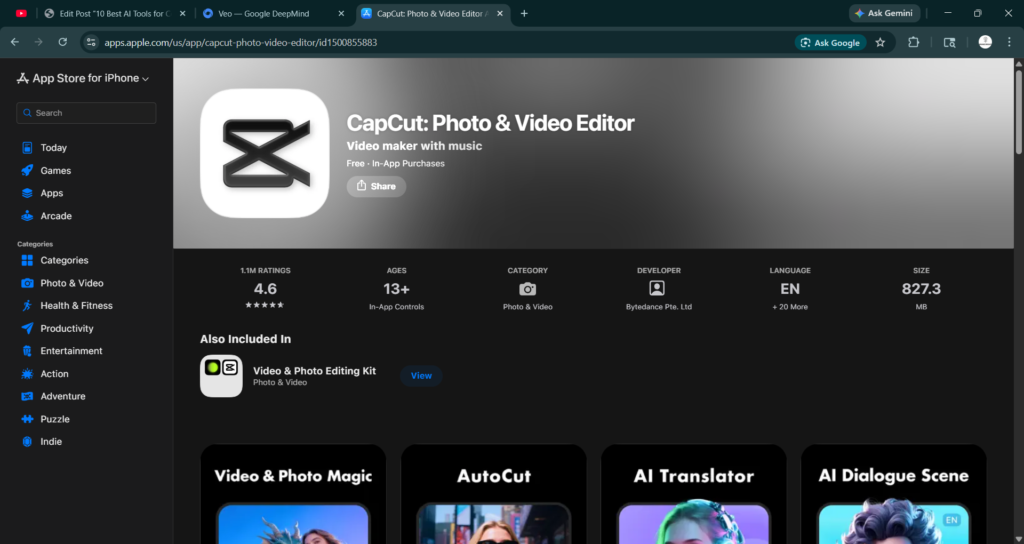
If you are a short-form creator (TikTok/Reels), CapCut is your best friend. It has integrated AI “Agents” that analyze trending songs and automatically cut your footage to the beat.
- Best For: Viral short-form content.
- The 2026 Edge: “Auto-Reframe” uses AI to ensure the subject of your video stays centered, even if you’re converting a horizontal landscape shot into a vertical Reel.
Actionable Takeaways for 2026
- Prioritize Brand Voice: Don’t use raw AI output. Use tools like Jasper or Custom GPTs to inject your unique “Human Signature.”
- Think Multimodal: A single blog post should now be a “Content Bundle.” Use Descript to turn it into a podcast and Veo to create a teaser video.
- Optimize for AI Overviews: Focus on being “answer-worthy.” Use Surfer SEO to ensure your content is structured for the AI search engines of today.
Conclusion
The “Best AI Tool” isn’t a single app—it’s the workflow you build. By 2026, 97% of content marketers are using AI. To stand out, you must stop using AI to replace your creativity and start using it to scale your unique perspective.