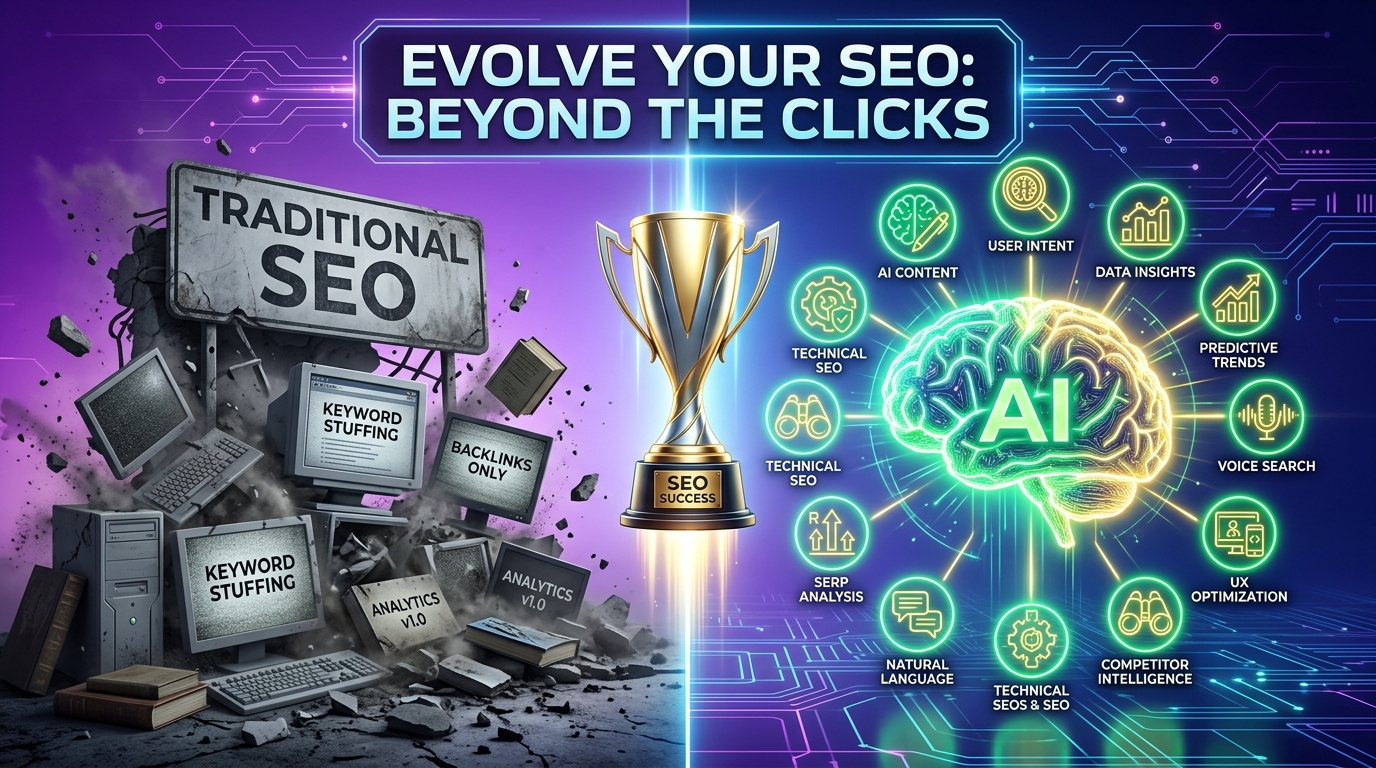
The digital landscape of 2026 is no longer about whether you use AI; it’s about how expertly you wield it. As search engines transition into “Answer Engines” and the sheer volume of content explodes, the “human-plus-AI” hybrid model has become the gold standard for success. According to recent 2026 industry reports, 97% of content marketers now integrate AI into their workflow, and those who do are seeing a 120% increase in organic traffic compared to those stuck in the manual past.
But with a sea of “GPT-wrappers” flooding the market, which tools actually move the needle for professional bloggers and growth-focused marketers? We’ve researched the top-performing platforms—testing them for SEO accuracy, brand voice consistency, and “Answer Engine Optimization” (AEO)—to bring you the definitive list for 2026.
1. Jasper AI: The Brand Voice Powerhouse
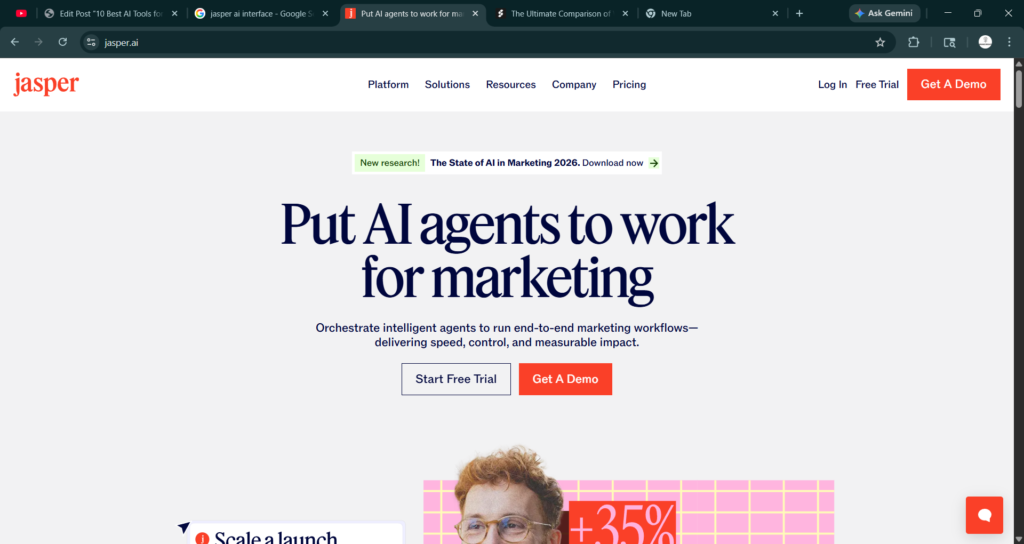
Jasper remains the reigning champion for marketing teams that need more than just “generic text.” In 2026, Jasper’s Brand Voice 2.0 is the standout feature. It doesn’t just scan your website; it learns your “soul”—the specific humor, sentence structures, and nuances that make your brand unique.
- Best For: Scaling on-brand marketing campaigns and long-form blogs.
- Key 2026 Feature: “Campaign Acceleration”—input one brief, and Jasper generates a blog post, 5 social captions, 3 email sequences, and an ad script, all perfectly synchronized.
- Real-World Impact: Agencies using Jasper report a 30% reduction in cost-per-piece while maintaining high editorial standards.
2. Surfer SEO: The Data-Driven Architect
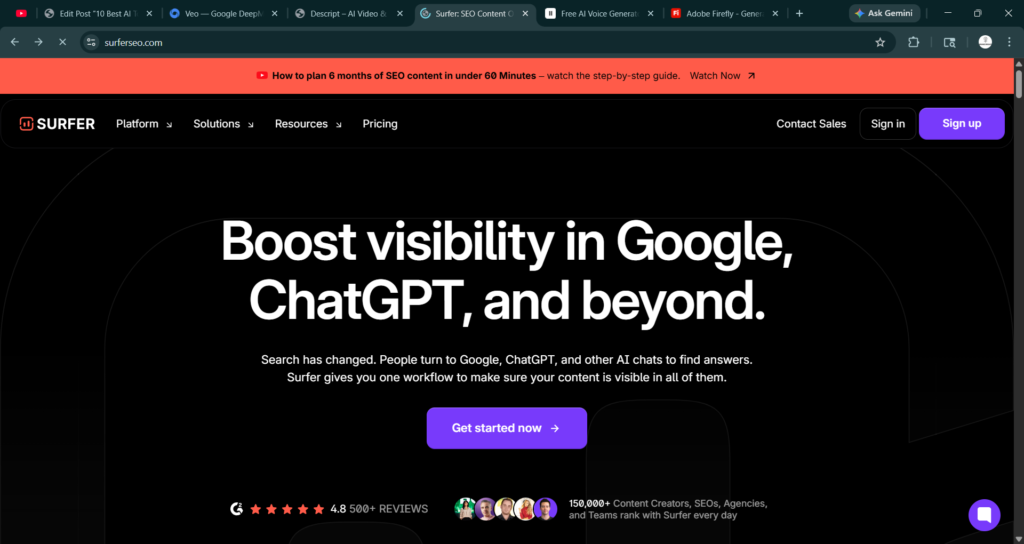
If you want to rank in 2026, you don’t just “write”; you optimize for the SERP (Search Engine Results Page). Surfer SEO has evolved from a simple auditor into a full-scale AI writer that mirrors the consensus of top-ranking pages.
- Best For: Pure SEO performance and outranking competitors.
- Key 2026 Feature: “AEO Bridge”—This tool specifically structures your content to be picked up by AI-powered search results (like Google’s AI Overviews and Perplexity).
- Insider Tip: Use the “Auto-Optimize” button after drafting to instantly inject missing semantic keywords without ruining the flow.
3. ChatGPT (GPT-5.4): The Versatile Swiss Army Knife
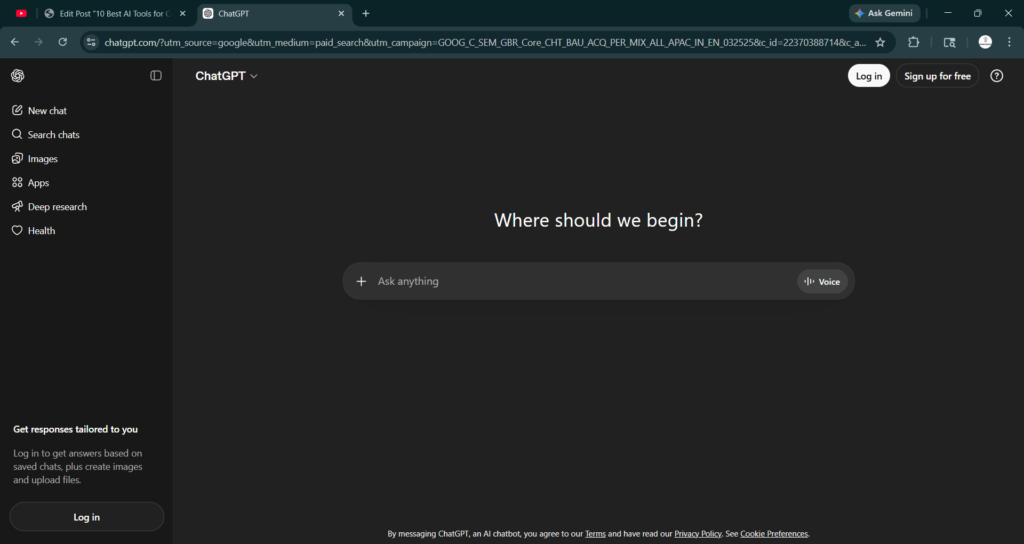
Now running on the GPT-5.4 architecture, ChatGPT is the most sophisticated general-purpose assistant. It’s no longer just a chatbot; it’s a researcher, coder, and creative partner.
- Best For: Ideation, complex research, and “Custom GPT” workflows.
- Stat to Note: It reached 800 million weekly active users in early 2026, making it the most trusted tool for initial drafts and brainstorming.
- Pro Strategy: Use the “Voice Mode” to dictate your thoughts while walking; ChatGPT will transcribe and format them into a structured blog outline instantly.
4. Claude (Anthropic): The Literary Specialist
For bloggers who pride themselves on high-quality, nuanced prose, Claude is often the preferred choice over ChatGPT. Its 1-million-token context window allows it to “read” your entire 50,000-word ebook and write a follow-up blog that perfectly matches the established style.
- Best For: Long-form writing, technical whitepapers, and deep-context analysis.
- Why it Wins: Claude is widely regarded as having the most “human-like” and least “robotic” writing style in the 2026 market.
5. eesel AI Blog Writer: The “One-Click” Scaler
A rising star in 2026, eesel AI is designed for high-volume publishers. It doesn’t just give you text; it gives you a publish-ready asset.
- Best For: Scaling niche sites and rapid content production.
- The Difference: It automatically pulls in real quotes from Reddit and YouTube, generates infographics, and formats the post for WordPress.
- Success Story: One case study showed a blog growing from 700 to 750,000 impressions in just three months using eesel’s automated pipeline.
6. Grammarly: The Ultimate Writing Coach
Grammarly is no longer just for fixing typos. Its generative AI, Grammarly Authorship, now acts as a writing coach that ensures your work is original and ethically produced—crucial in an era of AI detection.
- Best For: Refinement, tone checking, and maintaining human integrity.
- Highlight: It tracks what you type versus what the AI suggests, providing a “Human-Contribution Score” that many editors now require.
7. Writesonic: The GEO Specialist
As “Generative Engine Optimization” (GEO) becomes as important as SEO, Writesonic has pivoted to help marketers appear in AI chat answers.
- Best For: Real-time factual content and news-based blogging.
- Key Feature: “Chatsonic” pulls from Google Search in real-time, ensuring your 2026 statistics are actually from 2026, not 2023.
8. Copy.ai: The Workflow Automator
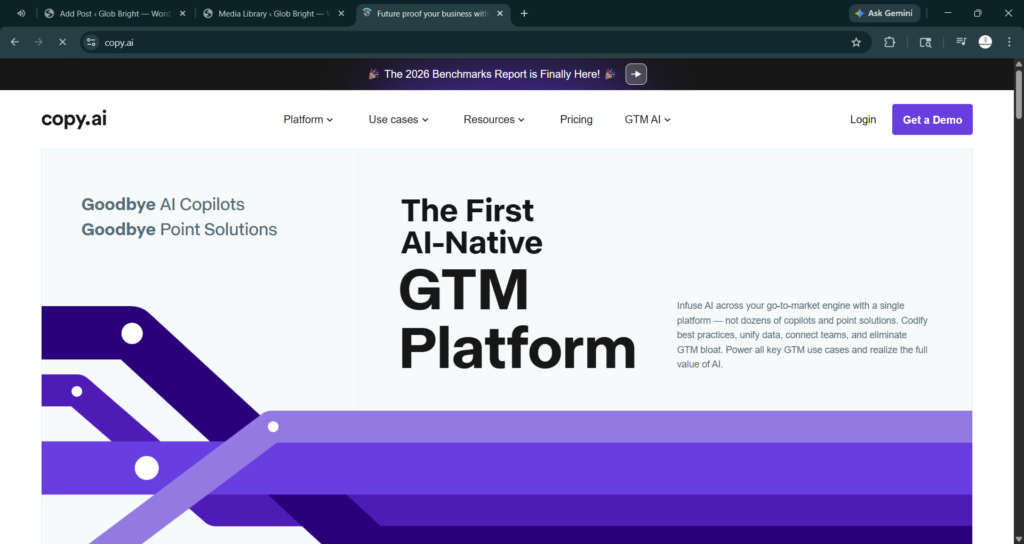
For marketers who hate repetitive tasks, Copy.ai is less about “writing” and more about “workflows.” It connects your CRM, social media, and blog into one automated loop.
- Best For: GTM (Go-To-Market) teams and social media managers.
- Use Case: Automatically turn a 20-minute podcast transcript into a comprehensive blog post and a week’s worth of LinkedIn content.
9. Frase: The Research Powerhouse
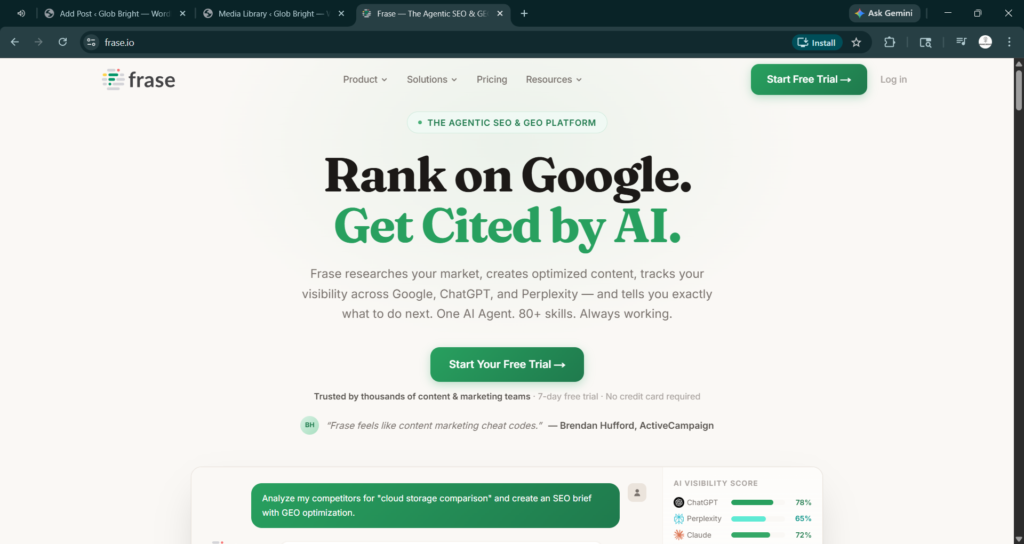
Frase specializes in the “pre-writing” phase. It saves hours by analyzing the top 20 search results and creating a research-backed content brief in seconds.
- Best For: Informational blogs and “Ultimate Guides.”
- Efficiency Gain: Marketers save an average of 2.2 hours per week on research alone using Frase’s SERP analyzer.
10. Sudowrite: The Creative’s Secret
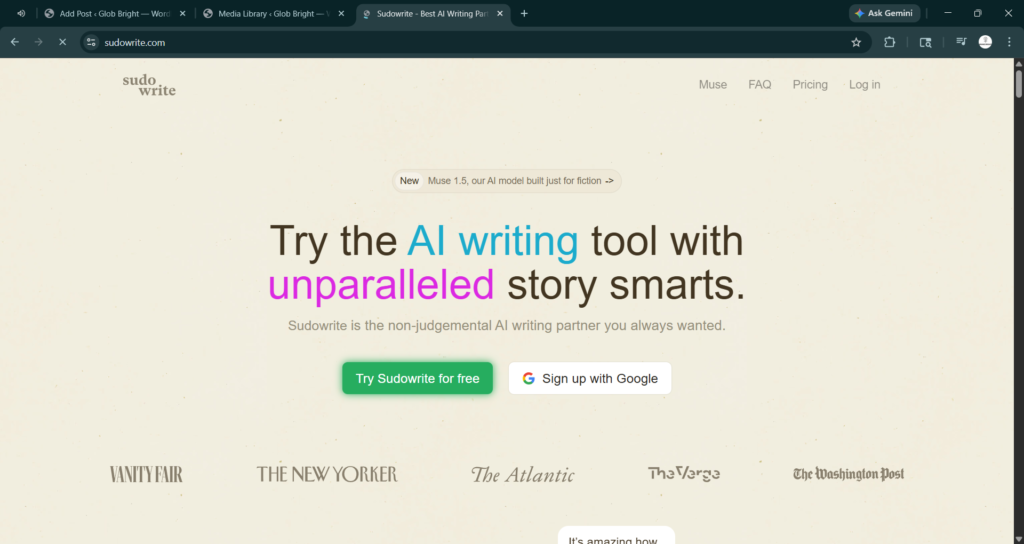
While primarily for fiction, bloggers are increasingly using Sudowrite’s “Sensory” and “Describe” features to add vivid imagery to their storytelling.
- Best For: Narrative-driven blogs and travel writing.
- Why use it: It helps break through writer’s block by suggesting unique plot twists or evocative descriptions that standard AI misses.
Conclusion: The Future belongs to the “Augmented” Creator
In 2026, the goal isn’t to let AI do the work—it’s to let AI do the heavy lifting. By using a tool like Surfer SEO for architecture, Jasper for brand voice, and Grammarly for the final polish, you can produce content that is 40% faster to write and 12% higher in quality than manual efforts.

AI definitely seems to be changing the content game, but I think it’s important to keep in mind that while AI tools can increase productivity, human input is still crucial to maintain authenticity and brand voice.
The shift toward a ‘human-plus-AI’ workflow really resonates with me—especially the part about AI not replacing creativity but amplifying it. It’s refreshing to see a guide that emphasizes brand voice consistency and SEO accuracy over just flashy features. This approach aligns with what’s actually working in 2026, and it’s great to see the focus on sustainable growth rather than quick wins.