In the fast-paced world of 2026, the gap between a struggling startup and a scaling unicorn isn’t just capital—it’s leverage. For small business owners who used to wear ten hats simultaneously, the narrative has shifted. You no longer need to be the CFO, the copywriter, and the customer support lead all at once. Today, the most successful entrepreneurs are essentially “AI Orchestrators,” managing a digital workforce that never sleeps.
The AI landscape has evolved from simple chatbots to agentic workflows—tools that don’t just suggest text but actually execute multi-step tasks across your entire tech stack. If you aren’t integrating these into your operations, you’re essentially bringing a knife to a laser-grid fight.
Here is your definitive guide to the 10 best AI tools that are redefining efficiency for small businesses and startups in 2026.
1. Averi: The All-in-One Content Engine
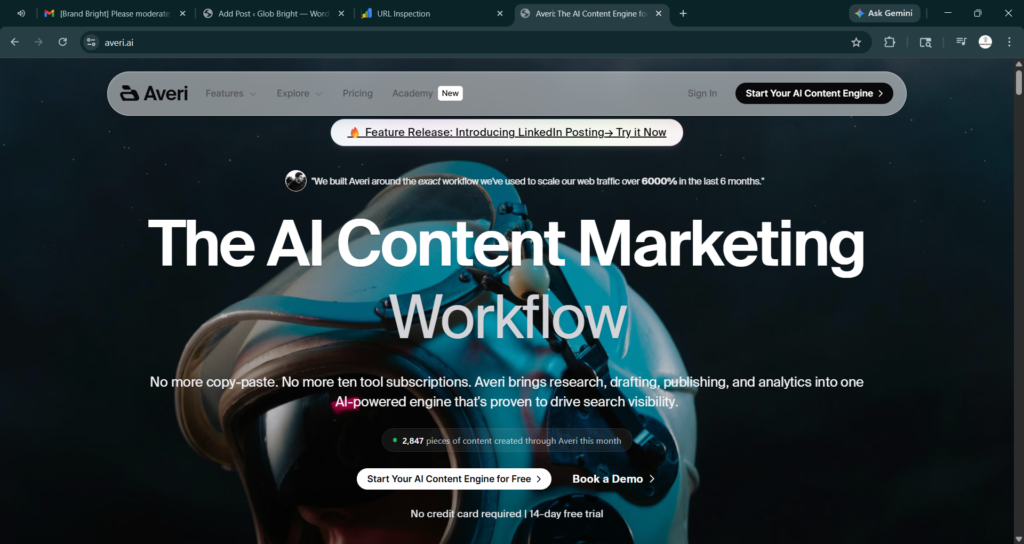
Gone are the days of jumping between Ahrefs for research, Google Docs for drafting, and WordPress for publishing. Averi has emerged as the premier “Content-as-a-Service” platform for startups.
What sets Averi apart in 2026 is its Brand Core technology. It doesn’t just scrape the web; it “lives” in your brand’s specific context. After analyzing your existing website and pitch decks, it generates SEO and GEO (Generative Engine Optimization) content that sounds exactly like your founders. For a lean startup, Averi replaces a $6,000/month content agency with a single, intelligent workspace that handles everything from topic clusters to automated CMS scheduling.
2. Gumloop: The No-Code Automation Architect
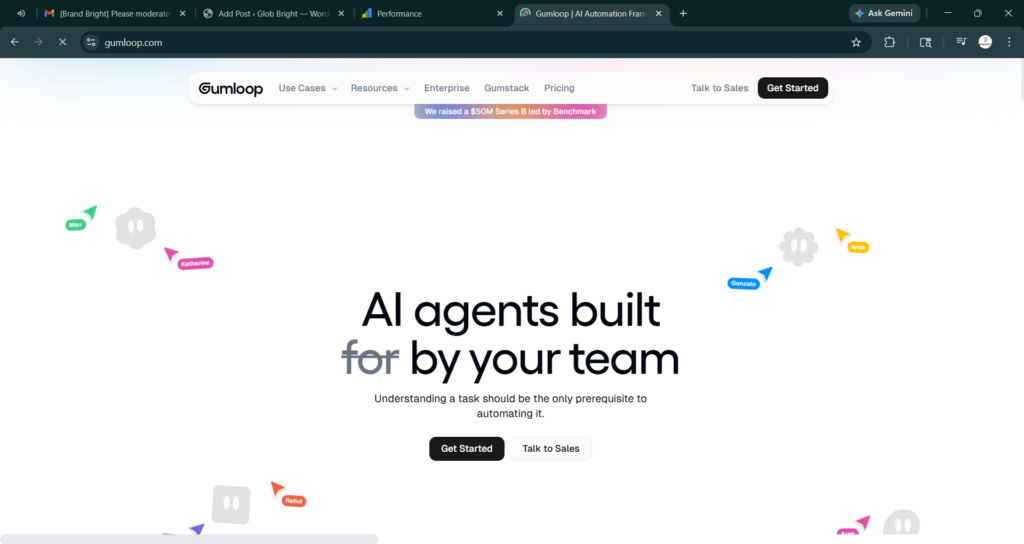
If Zapier is the plumbing of the internet, Gumloop is the smart home system. In 2026, startups are using Gumloop to build complex, agentic AI workflows without writing a single line of code.
Imagine this: A lead fills out a form. Gumloop automatically triggers an AI to research that lead’s LinkedIn, drafts a personalized pitch based on their recent posts, checks your team’s calendar for an open slot, and sends the email. It connects various LLMs (like Claude and GPT-5) to your internal data, allowing small teams to operate with the procedural power of a Fortune 500 company.
3. Gladly: Customer Service That Remembers
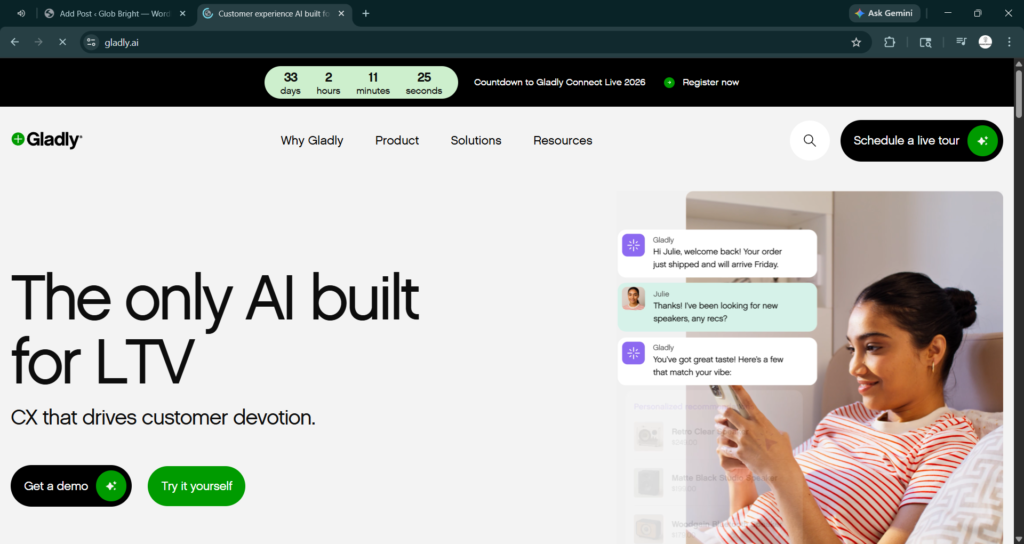
In 2026, customers are tired of “ticket numbers.” They want to be seen as people. Gladly has revolutionized the help desk by focusing on lifelong customer conversations rather than isolated incidents.
For small businesses, Gladly’s AI agents are a game-changer. Unlike the “dumb” chatbots of 2023, Gladly’s AI remembers that a customer bought a specific product three months ago and prefers eco-friendly shipping. It handles routine inquiries—returns, tracking, basic FAQs—with such high empathy and context that most customers don’t even realize they aren’t talking to a human. This allows your small team to focus only on the most complex, high-value human interactions.
4. Notion AI: Your Company’s Collective Brain
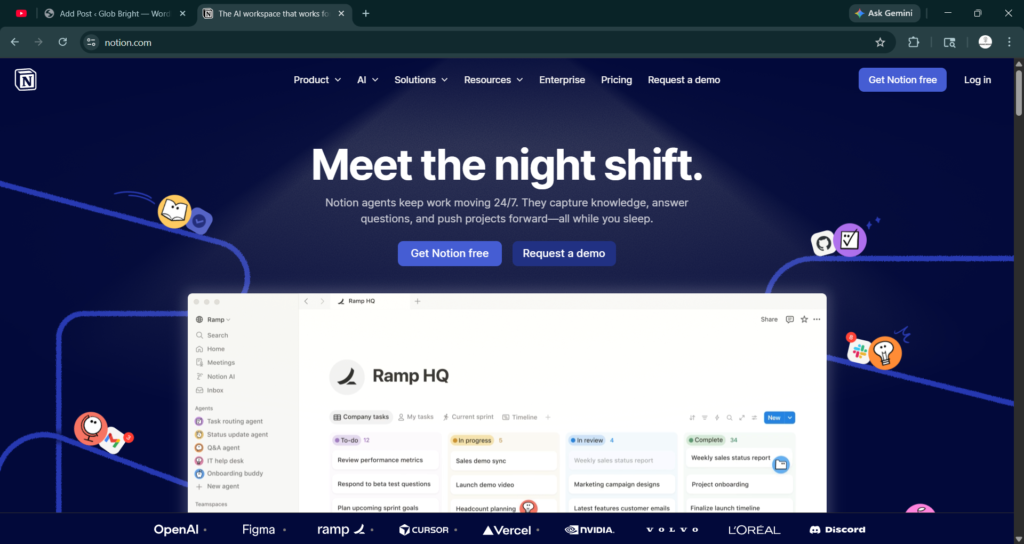
Notion has moved far beyond a simple note-taking app. In 2026, Notion AI serves as the central nervous system for startups. Its “Q&A” feature allows any employee to ask questions like, “What was our policy on remote stipends from the Q3 meeting?” and get an instant, cited answer from the company wiki.
For founders, its ability to summarize 50-page research papers or turn messy brainstorm notes into a polished project plan in seconds is invaluable. It’s the ultimate tool for maintaining “organizational memory” as your team scales from 2 to 20 people.
5. Drivetrain: The AI CFO for Non-Finance Founders
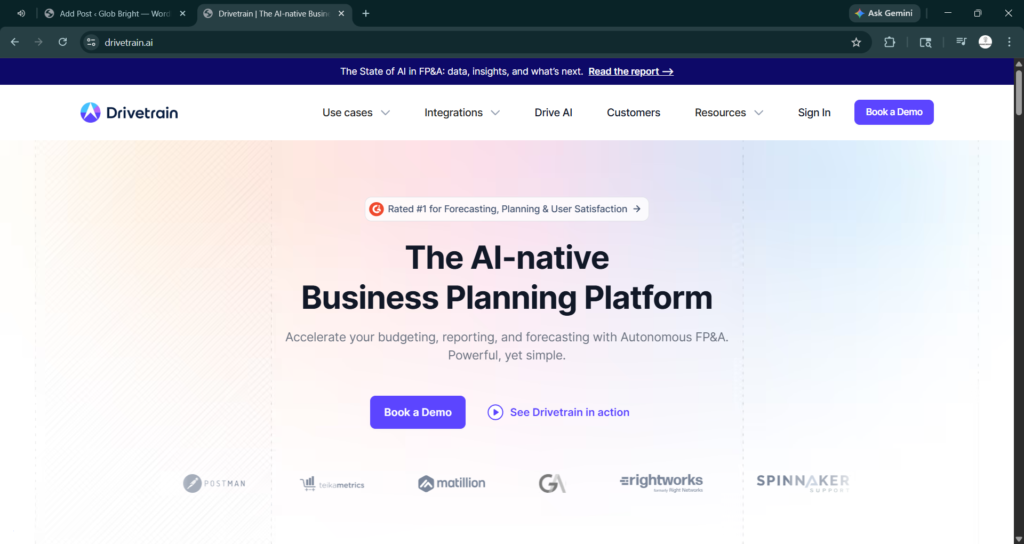
Most startup founders are brilliant at building products but struggle with “burn rates” and “unit economics.” Drivetrain is the AI financial modeling tool that bridges that gap.
It connects to your accounting software and uses predictive algorithms to create “What-If” scenarios. “What happens to our runway if we hire two engineers in June instead of August?” Drivetrain gives you a real-time visual answer. Its AI Alerts feature is particularly vital for small businesses, flagging anomalies in spend or revenue before they become crises, ensuring you never run out of cash unexpectedly.
6. Midjourney v7 & Canva Magic Studio: The Design Duo
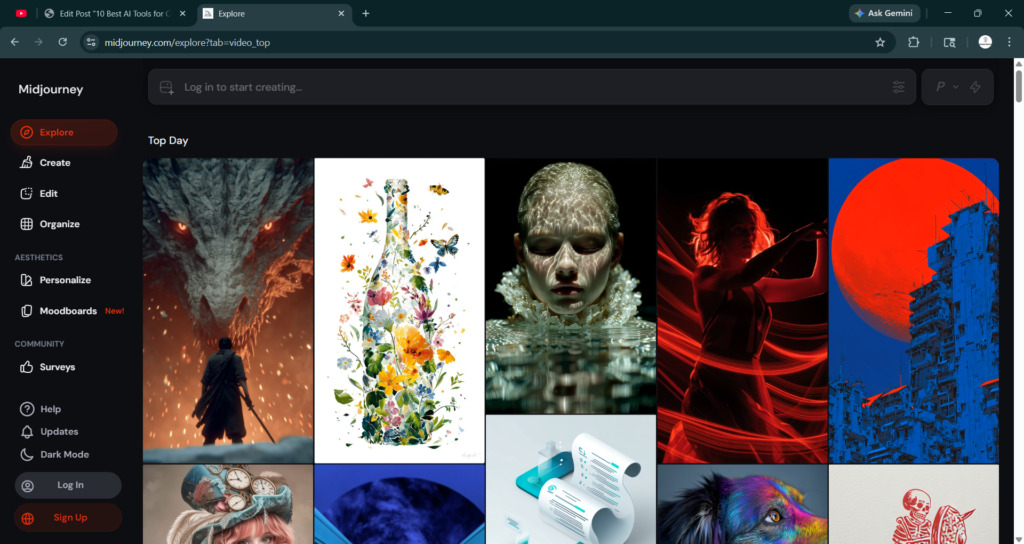
Visual storytelling is non-negotiable in 2026. While Midjourney (now with a highly intuitive web interface) provides world-class, photorealistic imagery for ad campaigns, Canva’s Magic Studio allows you to turn those images into full-scale marketing assets instantly.
Small businesses no longer need a full-time graphic designer to look premium. With “Magic Switch,” you can turn one social media post into an email header, a LinkedIn banner, and a print-ready flyer with one click, all while the AI ensures the brand colors and fonts remain consistent.
7. Claude 4 (Anthropic): The Analytical Partner
While ChatGPT is the “creative” favorite, Claude has become the go-to for startups needing deep technical analysis and long-form document handling. Claude’s “Artifacts” feature allows founders to visualize code, build simple website prototypes, or analyze massive legal contracts in a dedicated side-window.
For a startup founder reviewing a 40-page lease or a complex Terms of Service agreement, Claude’s ability to spot “red flag” clauses with near-human legal precision is a massive cost-saver on legal fees.
8. Otter.ai: Turning Meetings into Momentum
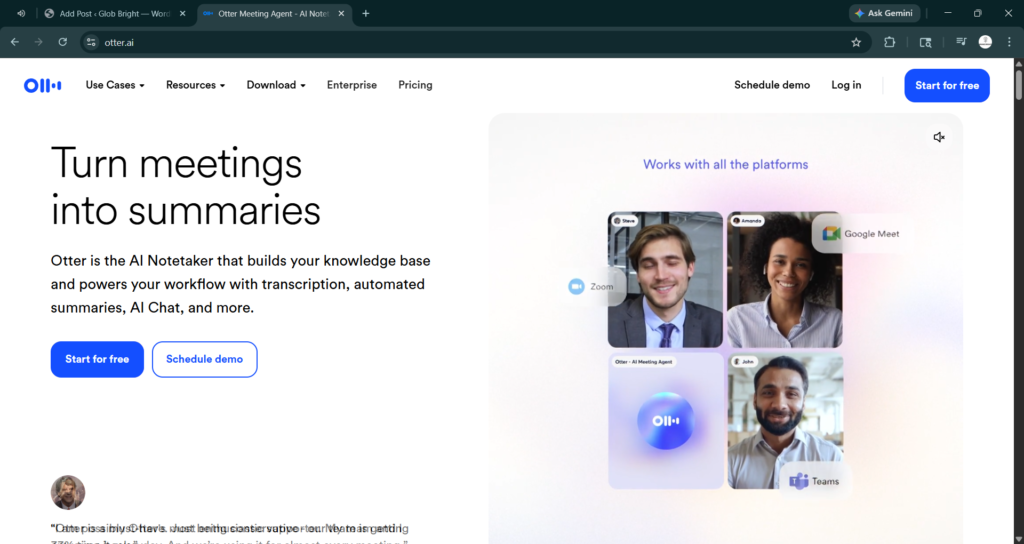
In the remote-first world of 2026, meeting fatigue is real. Otter.ai has evolved from a simple transcription tool into an active meeting participant. It doesn’t just record; it assigns action items, summarizes key decisions, and even allows team members who missed the call to “chat” with the meeting later.
If you’re a small business owner running back-to-back client calls, Otter ensures that no “gold nuggets” of information are lost in the shuffle, automatically syncing tasks to your project management tool of choice.
9. Surfer SEO: The Search Dominator
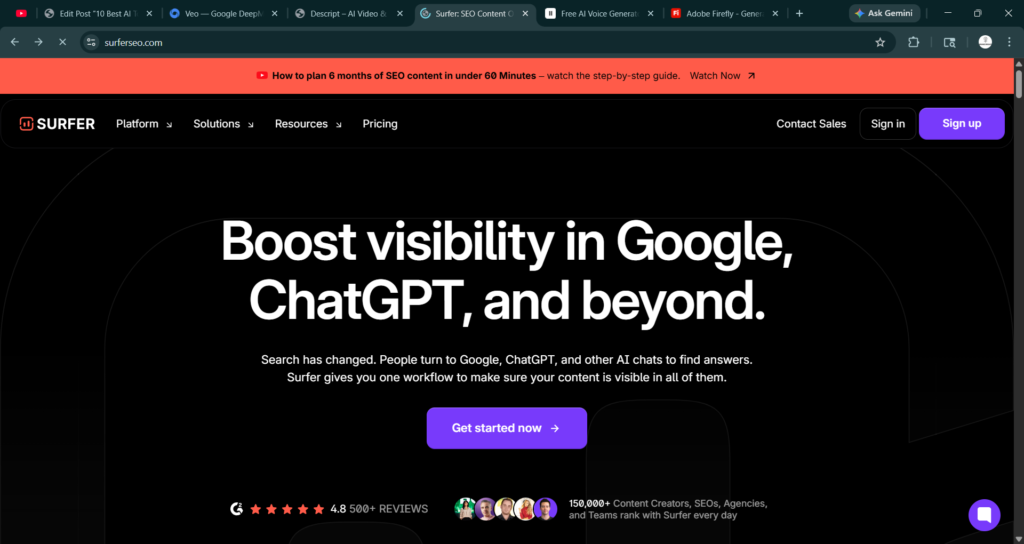
Organic traffic remains the “holy grail” for low-cost growth. Surfer SEO’s 2026 update includes “Auto-Optimize,” which monitors your competitors’ rankings in real-time.
If a competitor publishes a new guide that starts ranking for your target keywords, Surfer alerts you and suggests exactly what sections to add to your existing blog posts to maintain your position. For startups, this means your content remains a “living asset” that continues to generate leads years after it was written.
10. Perplexity: The Research Powerhouse
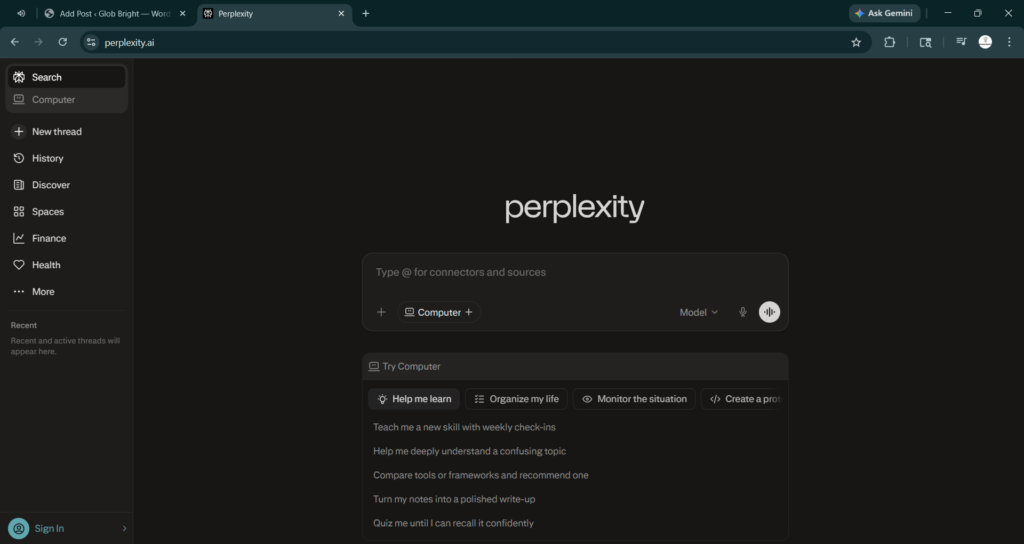
Market research used to take weeks. With Perplexity, it takes minutes. Acting as a “search engine with a brain,” Perplexity provides real-time, cited answers to complex business queries.
“What are the current regulatory trends for Fintech in Southeast Asia for 2026?” Perplexity won’t just give you a list of links; it will write a summarized report with links to the original sources. For startups looking to pivot or enter new markets, this tool provides the “information edge” previously reserved for large consulting firms.
Actionable Takeaways for Your Startup
- Audit Your Friction: Identify the task you hate doing most each week. There is likely an AI tool on this list that can automate 80% of it.
- Start Small: Don’t try to implement all 10 at once. Start with a central “brain” like Notion AI or an automation hub like Gumloop.
- Focus on Context: The best AI tools in 2026 are the ones you can “train” on your specific data. Prioritize tools that allow you to upload your brand guidelines and historical data.
Conclusion
The “Great AI Leveling” is here. In 2026, being a “small” business is no longer a disadvantage—it’s an opportunity to be more agile, personalized, and efficient than the corporate giants. By strategically implementing these 10 tools, you aren’t just saving time; you are building a scalable foundation that allows your vision to reach its full potential without the traditional overhead.


The shift toward AI as a digital workforce is genuinely transformative for small businesses—especially how it allows entrepreneurs to focus on strategy while AI handles repetitive tasks. It’s not just about automation, but about redefining what it means to be productive in 2026. This perspective really highlights the importance of embracing AI not as a luxury, but as a competitive necessity.
The idea of entrepreneurs focusing on AI orchestration rather than doing every task themselves really resonates. It shifts the definition of productivity from personal output to how well you manage and coordinate automated workflows. I’m curious how businesses are balancing this with the need for human creativity and oversight.