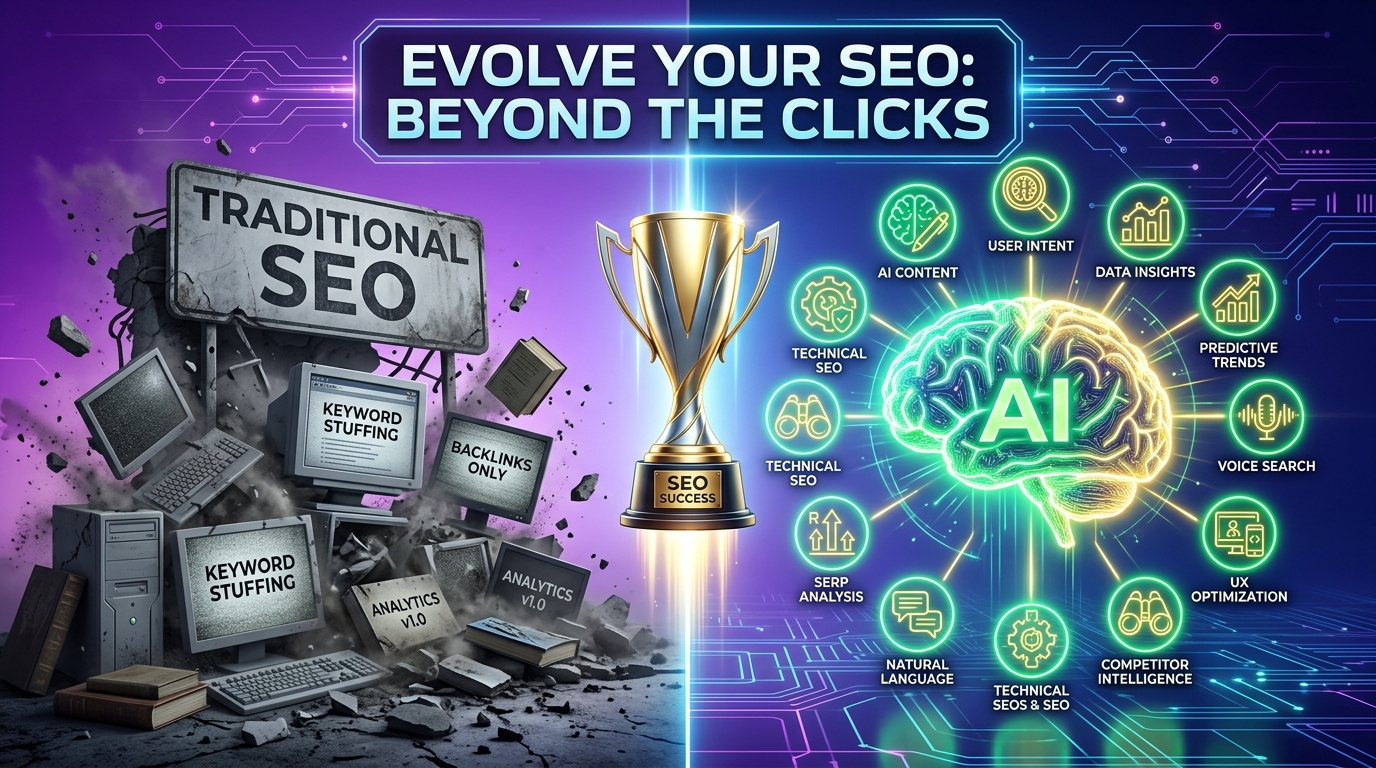
The search landscape of 2026 has officially moved beyond the “10 blue links.” We are now living in the era of Generative Engine Optimization (GEO) and AI Overviews, where being “indexed” isn’t enough—you need to be “cited.” As search engines like Google and Bing transform into sophisticated answer engines, the tools we use to reach our audience must evolve too.
If you’re still relying on 2023 tactics, you’re essentially bringing a knife to a laser-tag fight. Today, success is measured by AI Share of Voice, Entity-based Authority, and Multimodal Visibility. To help you navigate this high-tech frontier, I’ve researched and tested the top contenders. Here are the 10 best AI SEO tools to dominate the rankings in 2026.
1. Ahrefs: The “Brand Radar” Revolution
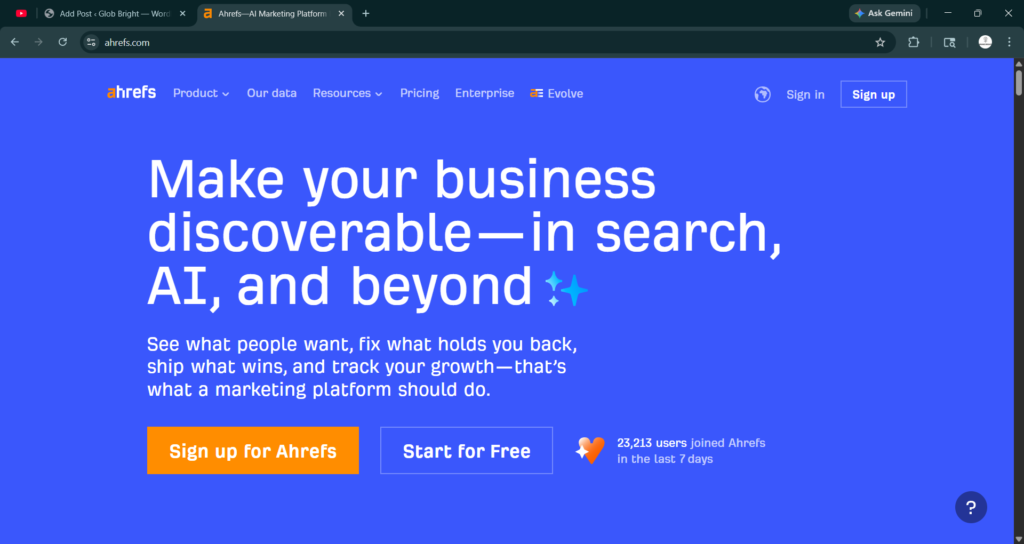
Ahrefs has long been the gold standard for backlink data, but in 2026, it has reinvented itself as a command center for AI Visibility. Its standout feature, Brand Radar, is a game-changer. Instead of just tracking keyword rankings, it monitors how often your brand is mentioned across 243 million real-world AI prompts on ChatGPT, Perplexity, and Gemini.
- Why it’s a winner: It tracks “AI Share of Voice,” showing you exactly which websites AI models cite when they answer questions in your niche.
- Best For: Tracking brand authority in generative search results.
2. Surfer SEO: Real-Time Content Intelligence
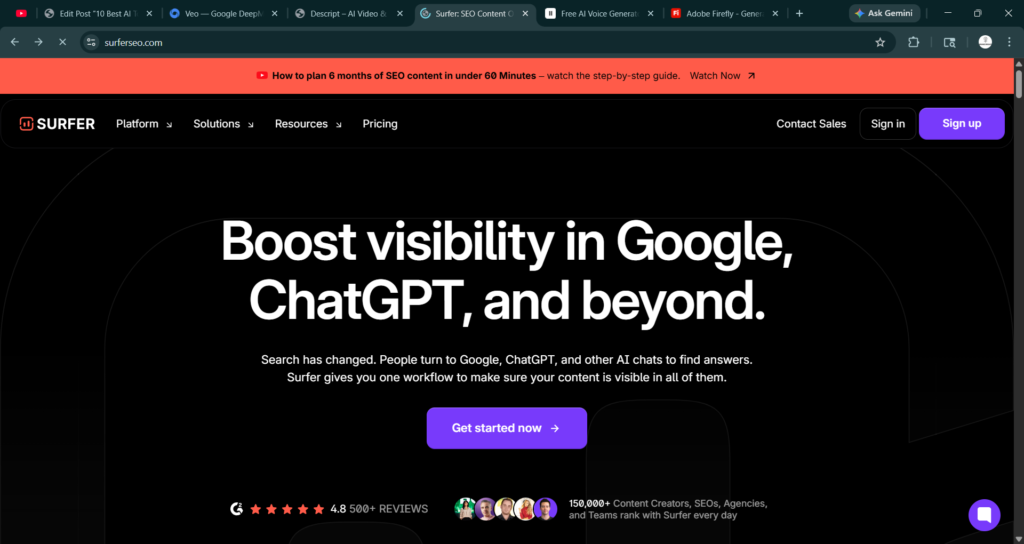
Surfer SEO remains the favorite for writers, but its 2026 update includes AI Search Intent Mapping. It doesn’t just tell you which keywords to use; it analyzes the current SERP and AI Overviews to tell you why a user is searching.
- Key Feature: The “Auto-Optimize” function can refresh your old content in seconds to meet new E-E-A-T (Experience, Expertise, Authoritativeness, and Trustworthiness) standards.
- Best For: On-page optimization and maintaining content freshness.
3. Clearscope: The Quality Guardian
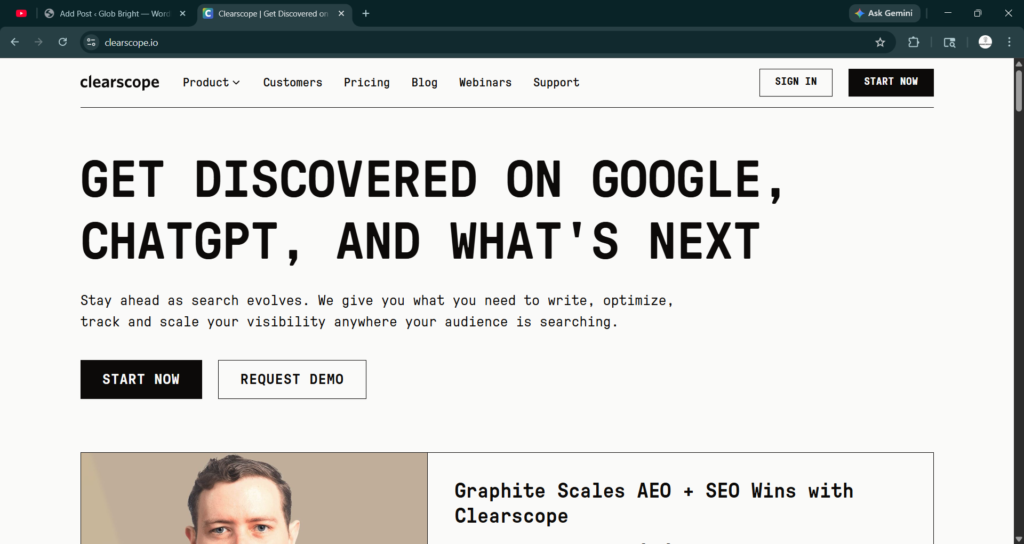
In 2026, “thin” AI content is penalized faster than ever. Clearscope uses advanced Natural Language Understanding (NLU) to ensure your content has the semantic depth required to rank. It gives your articles a “Content Grade” based on how well you cover the “entities” (concepts and facts) that search engines expect.
- Pro Tip: Use its “Topic Mapping” to see which sub-topics your competitors are missing.
- Best For: Enterprise-grade content quality and editorial teams.
4. SEMrush: The All-in-One Predictive Suite
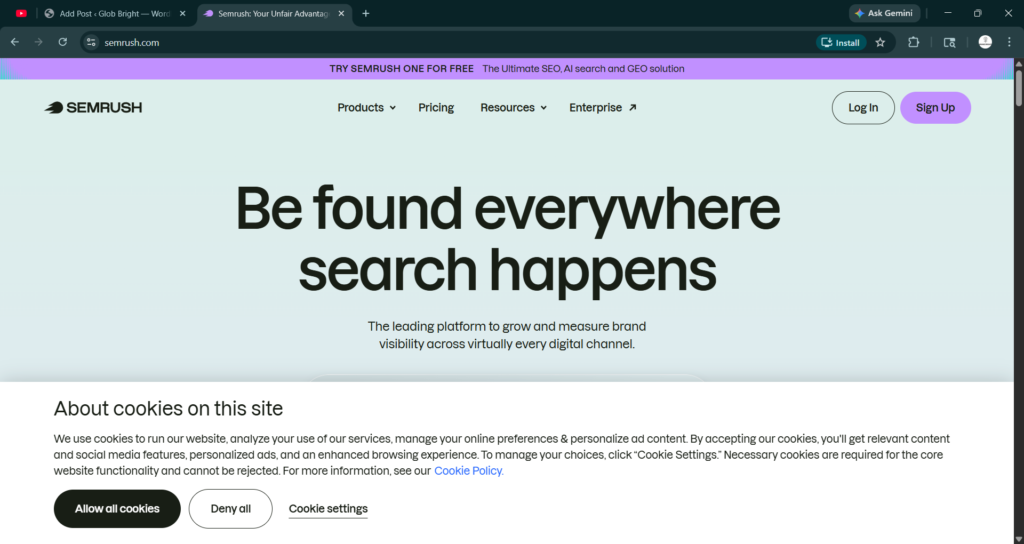
SEMrush has integrated Predictive Analytics into its toolkit. It uses historical SERP data and machine learning to project keyword difficulty 12 months into the future. This allows you to target “rising star” keywords before they become hyper-competitive.
- Standout Tool: The AI Writing Assistant now includes a “Plagiarism and AI-Detection Bypass” to ensure your content feels human-centric and unique.
- Best For: Agencies and marketers needing a 360-degree view of their digital presence.
5. MarketMuse: The Authority Architect
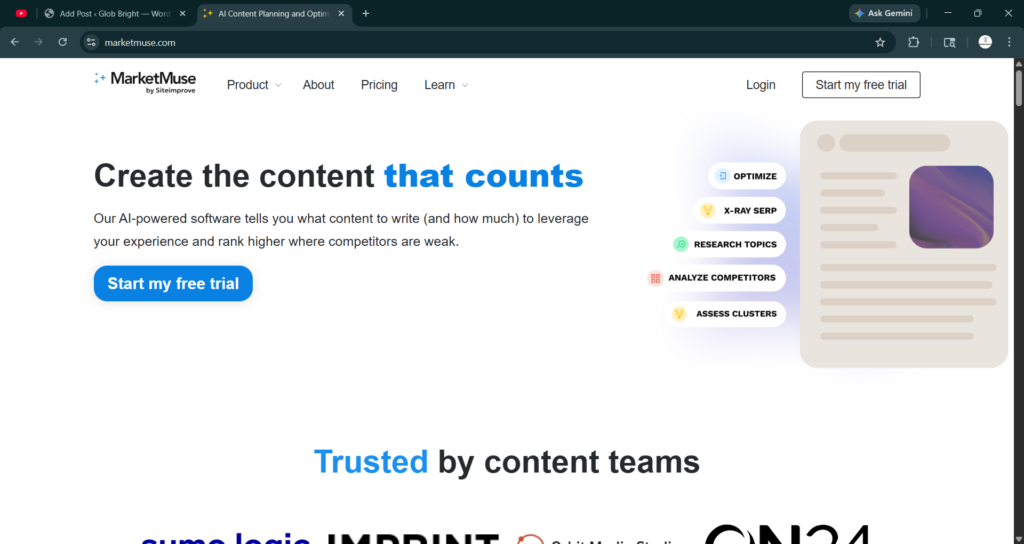
If you want to be the “source of truth” in your industry, MarketMuse is your tool. It specializes in Content Clusters. Instead of looking at a single blog post, it analyzes your entire site to find “authority gaps.”
- The 2026 Edge: It now provides specific recommendations to increase your chances of being featured in Google’s AI Overviews.
- Best For: Long-term content strategy and building topical authority.
6. Frase: The GEO Specialist
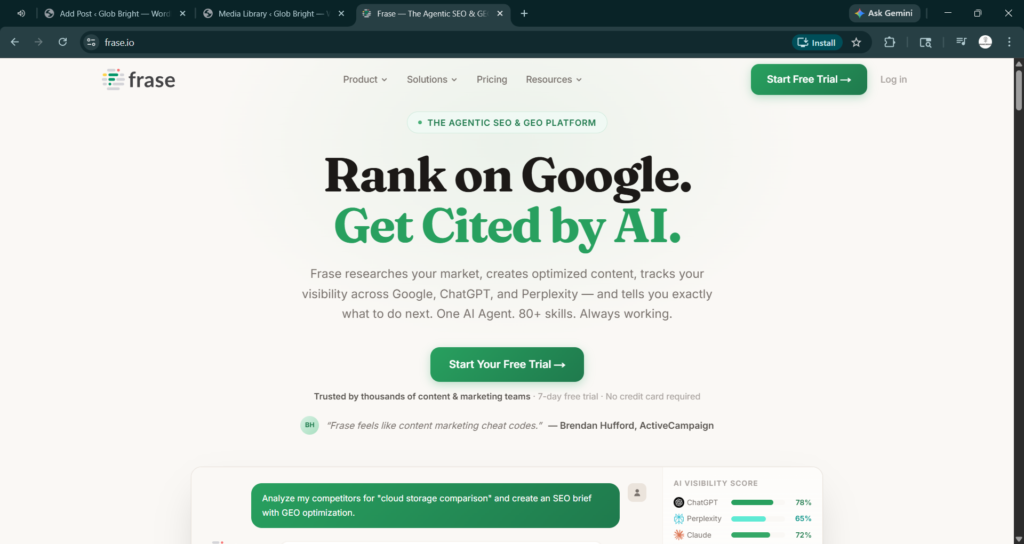
Frase has pivoted hard into Generative Engine Optimization. It helps you structure your content in a Q&A format that AI models like Perplexity love to crawl. Its “Snippet Optimization” tool specifically targets the brief, punchy answers that appear at the top of search results.
- Key Benefit: It automatically extracts the most common questions from Reddit, Quora, and “People Also Ask” to fuel your FAQ sections.
- Best For: Capturing “Zero-Click” search traffic.
7. NEURONwriter: High-Value Scalability
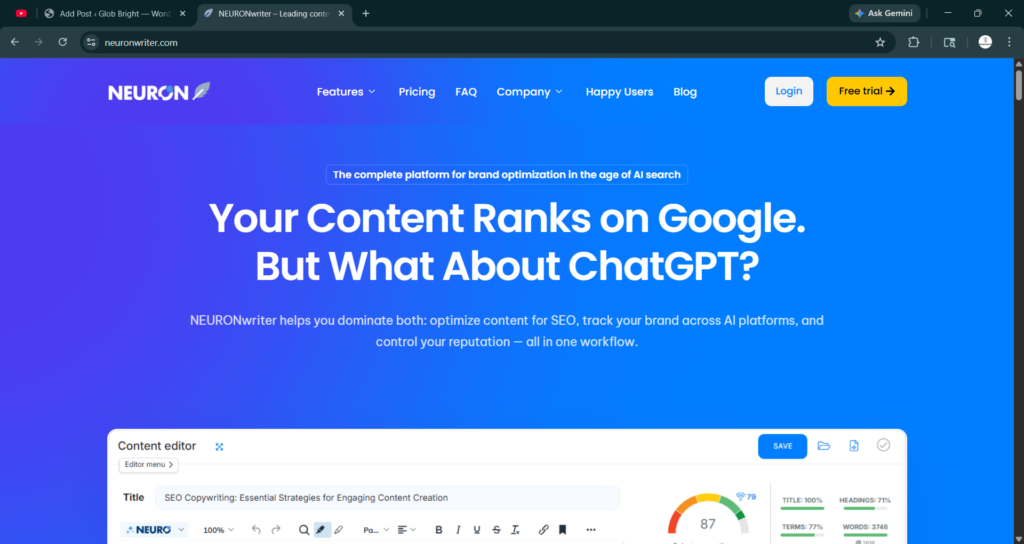
For those who need power without the enterprise price tag, NEURONwriter is the 2026 breakout star. It combines NLP-driven recommendations with an incredibly intuitive AI drafting tool.
- Why it’s popular: It offers “Plan & Write” workflows that handle everything from keyword clustering to the final meta description in one interface.
- Best For: Freelancers and small-to-medium businesses.
8. Spotlight: The AI Reputation Monitor
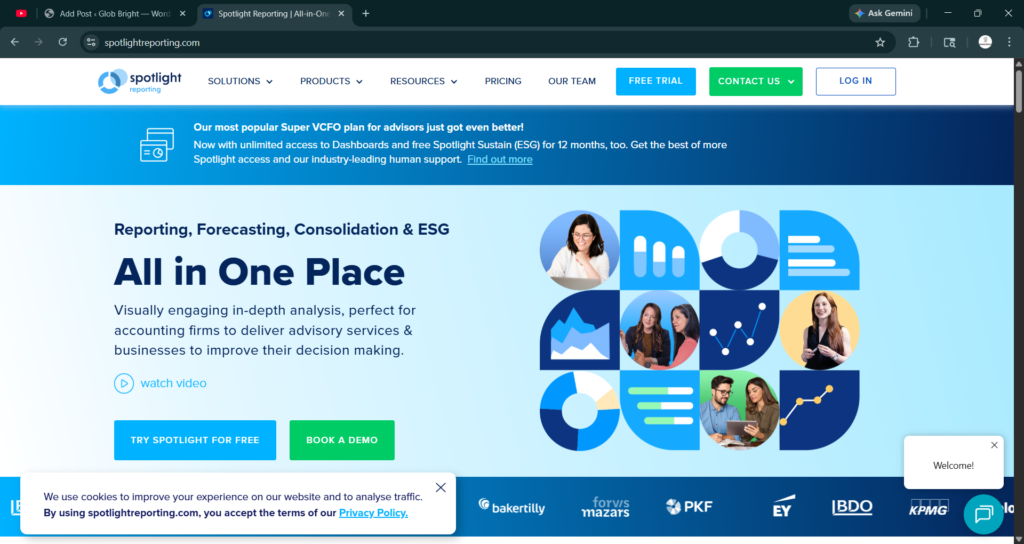
Spotlight is a specialized tool that focuses exclusively on how your brand appears in AI-generated answers. It provides a “Sentiment Score” for your brand across different LLMs (Large Language Models), helping you identify if AI is giving users incorrect or negative information about your business.
- Must-Have Feature: It alerts you whenever a competitor is cited in a prompt where you should have been the primary source.
- Best For: Reputation management and PR-focused SEO.
9. Rank Math (Content AI): The WordPress Powerhouse
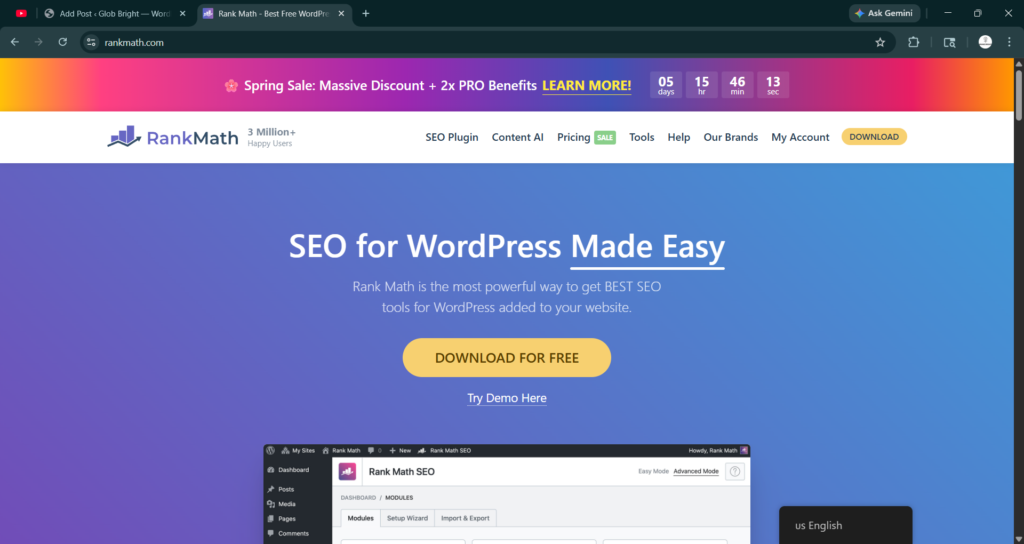
For WordPress users, Rank Math’s “Content AI” has become a sophisticated assistant. It uses proprietary algorithms to suggest internal links and schema markup that are specifically designed for Multimodal Search (voice and visual).
- Unique Feature: It can generate “Image SEO” tags that help your visuals appear in AI-driven visual search results.
- Best For: WordPress site owners and bloggers.
10. Google Gemini (as an SEO Strategist)
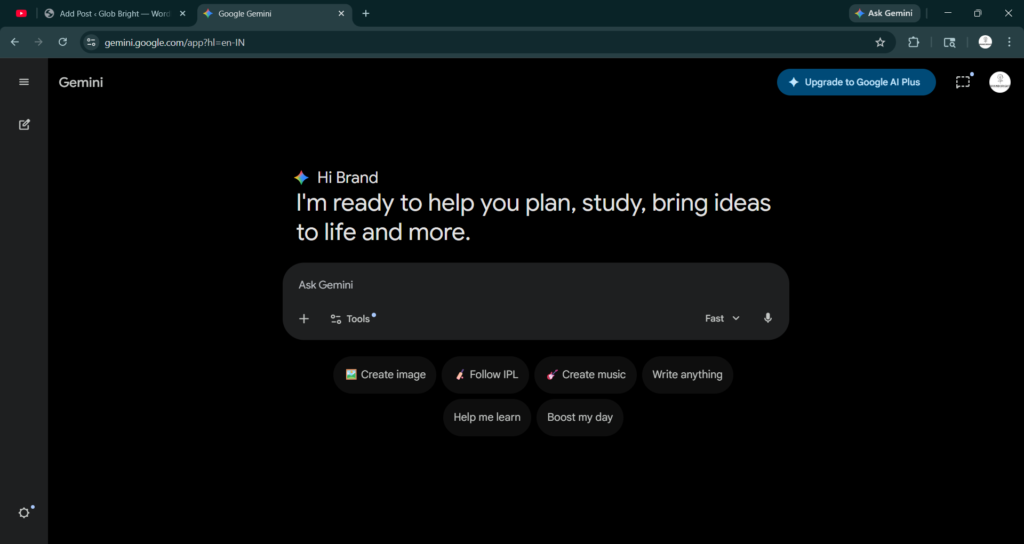
It might feel like “cheating,” but using Google’s own AI, Gemini, is one of the smartest SEO moves in 2026. Because Gemini powers Google’s search experience, it is uniquely qualified to help you brainstorm content structures that align with Google’s evolving guidelines.
- How to use it: Ask Gemini to “critique this article from the perspective of a Google Quality Rater.”
- Best For: Validating strategy and understanding search intent.
Actionable Takeaways for 2026
- Prioritize “Citaton-Worthiness”: Use data, original research, and unique quotes. If an AI can’t cite you, it won’t show you.
- Optimize for Entities, Not Just Keywords: Focus on covering a topic comprehensively rather than repeating a specific phrase.
- Update Content Bi-Weekly: In the fast-moving world of 2026, content that is three months old is “ancient history.”
- Embrace Multimodal: Ensure your images, videos, and data tables have proper schema markup so they can be “seen” by AI agents.
Conclusion: The Human Advantage
While these 10 tools provide the “horsepower” for your SEO strategy, the “steering” still requires a human touch. In 2026, the websites that rank the highest aren’t just the ones with the best tools—they are the ones that use AI to amplify real human expertise. Use these tools to handle the data, but never lose your unique brand voice.
Generative Engine Optimization (GEO), AI Share of Voice, Entity-based SEO 2026, AI Overview optimization tools, Predictive keyword research, LLM citation tracking, Multimodal search strategy, E-E-A-T for AI search, Zero-click search analytics, AI visibility monitoring



Generative Engine Optimization seems like a real game-changer for how content gets discovered. It makes me think about the challenges smaller teams might face in adopting these AI-driven strategies and how to prioritize what actually moves the needle.
The shift toward Generative Engine Optimization (GEO) and AI Overviews is really reshaping how we approach SEO—thanks for highlighting how critical it is to move beyond traditional tactics. It’s fascinating to see how the focus has shifted from just being indexed to being cited, especially with search engines becoming more sophisticated answer engines. Your breakdown of the key metrics like AI Share of Voice and Entity-based Authority gives a clear roadmap for staying ahead in 2026.
The shift toward AI Overviews and Generative Engine Optimization really underscores how critical it is to move beyond traditional SEO tactics. It’s fascinating to see how the focus has evolved from just being indexed to being cited and authoritative in the eyes of AI-powered search engines. This evolution makes tools like Ahre even more relevant for staying ahead in 2026.
The shift toward Generative Engine Optimization (GEO) and AI Overviews is really reshaping how we approach SEO—thanks for highlighting how critical it is to move beyond traditional tactics. It’s fascinating to see how the focus has shifted from just being indexed to being cited, especially with search engines becoming more sophisticated answer engines. Your take on AI Share of Voice and Entity-based Authority really resonates as key metrics for success in 2026.