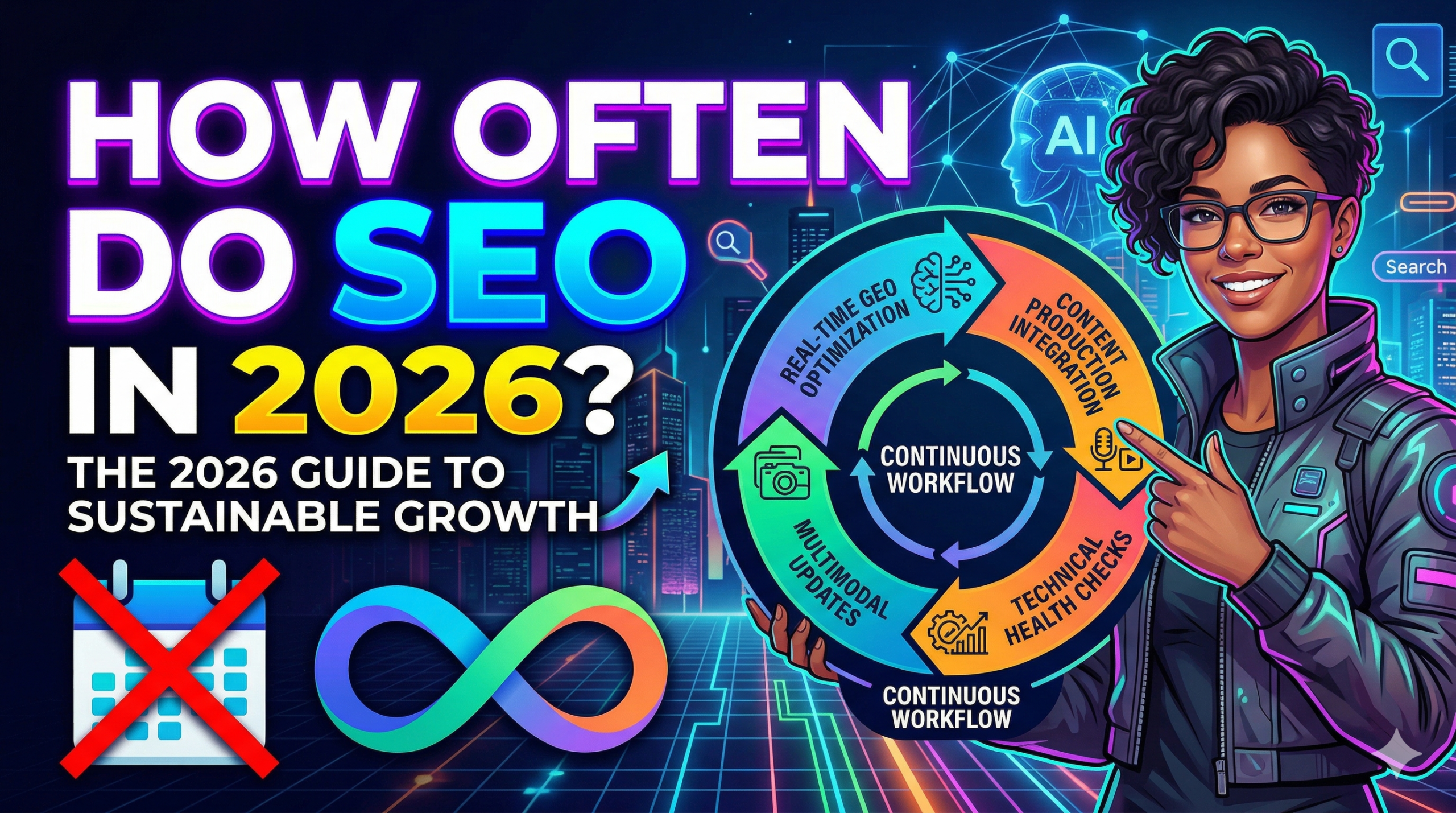
In the rapidly evolving digital landscape of 2026, the question is no longer “should I do SEO?” but rather, “How often should I do SEO to stay ahead?” If you treat SEO like a “set it and forget it” microwave dinner, you’ll quickly find your rankings cold and unappealing. Today, search engines like Google and AI-driven platforms like Perplexity or ChatGPT (via Search) function less like static libraries and more like living organisms. They demand fresh signals, technical precision, and unwavering authority.
Doing SEO is a marathon, not a sprint. If you stop running, your competitors—who are likely using automated AI audits and real-time content optimization—will sprint right past you.
1. The “Always-On” Mindset: Why SEO Never Stops
In 2026, SEO is “always on.” This doesn’t mean you need to spend 24 hours a day staring at Google Search Console, but it does mean your strategy must be continuous.
The Decay of “One-Time” SEO
A website optimized in January 2025 but left untouched until 2026 is effectively obsolete. Search intent shifts—what people searched for a year ago (e.g., “best remote work tools”) has evolved into more specific, AI-integrated queries (e.g., “AI-native project management for decentralized teams”).
- Algorithm Volatility: Google now rolls out “micro-updates” almost daily, with major core updates occurring quarterly.
- The AI Factor: AI search engines prioritize “freshness” and “verified expertise” (E-E-A-T). If your content isn’t updated with current data, AI overviews will skip your site in favor of a more recent source.
2. Daily SEO Tasks: The Pulse of Your Site
You don’t need a massive overhaul every day, but you do need to keep your finger on the pulse.
- Monitor Critical Metrics: Spend 10 minutes daily checking for sudden drops in organic traffic or keyword rankings. Tools like Semrush or Ahrefs can send automated alerts.
- Engagement Tracking: Look at how users are interacting with your newest content. In 2026, Interaction to Next Paint (INP) and user dwell time are massive ranking signals.
- Social & Mention Listening: Search engines now track “brand mentions” across the web. Engaging with your community daily builds the “Trust” in your E-E-A-T profile.
3. Weekly Maintenance: Content & Health Checks
Weekly tasks are about incremental gains. This is where you move the needle.
- Content Production: Aim to publish at least 1–2 pieces of high-quality, human-centric content per week. In the age of AI-generated fluff, original research and first-hand experience (the “Experience” in E-E-A-T) are gold.
- Technical Scanning: Run a weekly scan for broken links (404 errors) or server errors. A single broken link on a high-traffic page can signal neglect to a crawler.
- Google Business Profile (GBP) Updates: For local businesses, 2–4 posts per week on your GBP are essential to stay in the “Local Map Pack.”
4. Monthly Audits: The Deep Dive
Once a month, you need to step back and look at the bigger picture.
The Content Refresh
Go through your top 10 most visited pages. Is the information still accurate? Are the links still relevant? Updating a high-performing blog post with a few new paragraphs and updated statistics can often yield a bigger ranking boost than writing a brand-new post.
Competitor Gap Analysis
What are your competitors doing this month? Have they started ranking for a new long-tail keyword? Use this data to adjust your content calendar for the following month.
5. Quarterly Strategic Reviews: The Pivot
Every three months, perform a comprehensive Technical SEO Audit.
- Core Web Vitals Check: Ensure your Largest Contentful Paint (LCP) is still under 2.5 seconds.
- Schema Markup Review: Ensure your structured data is correctly identifying your authors, products, and events.
- Backlink Cleanup: Review your backlink profile. Disavow toxic links and identify new “authority” sites in your niche for potential outreach.
6. Small vs. Large Websites: Different Frequencies
The “how often” also depends on the size of your digital footprint.
| Feature | Small Business (1–50 pages) | Enterprise/E-commerce (500+ pages) |
| Content Updates | Weekly | Daily |
| Technical Audits | Quarterly | Monthly |
| Rank Tracking | Weekly | Daily |
| Link Building | Monthly | Continuous |
Conclusion: Consistency is the New Authority
SEO in 2026 is about predictability and trust. Search engines want to know that if they send a user to your site, that user will find fast, accurate, and up-to-date information. If you only “do SEO” once a year, you are telling search engines that your site is a static archive, not a dynamic resource.


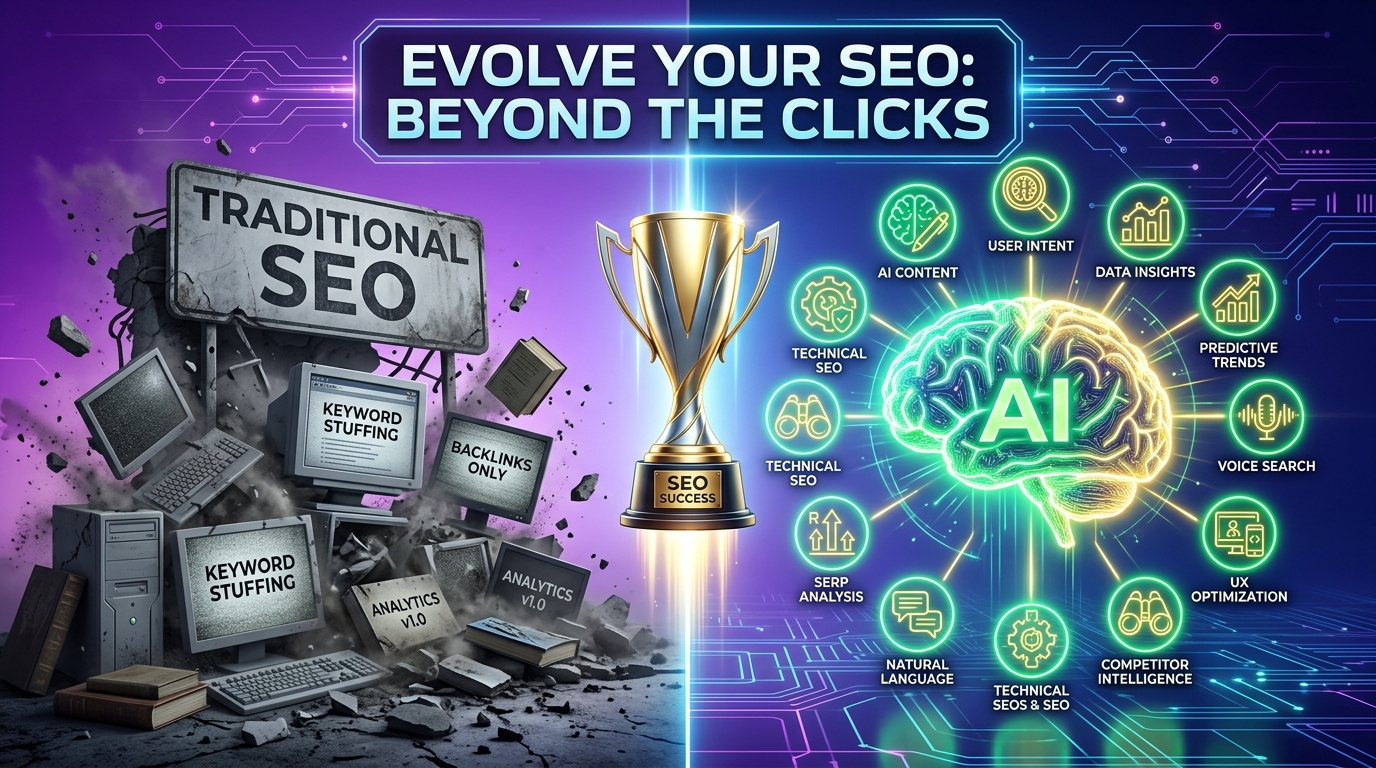

I really appreciated the emphasis on keeping content fresh rather than relying on one-time optimization. In my experience, revisiting older posts and aligning them with current search intent often has a bigger impact than just publishing new content. It’s a clear reminder that SEO is a continuous, evolving process rather than a set-and-forget task.